Laser Hair Removal With a Tan: What You Need to Know

Last Updated: October 22, 2026
Quick Summary
You usually cannot get laser hair removal with a tan on the day of your appointment, because most providers will reschedule treatment on tanned skin. A tan raises the risk of burns and dark spots and makes laser hair removal less effective, so wait at least two weeks and until the tan fades.
Most clinics use a two-week minimum after a tan has visibly faded before treating.
Self-tanner should be stopped at least two weeks before your appointment.
Skip tanning and direct sunlight for at least two weeks after a session.
Use broad-spectrum sunscreen with SPF 30 or higher daily during your course.
Nd:YAG lasers are often chosen for deeper skin tones and recently tanned patients.
Table of Contents
Can You Get Laser Hair Removal With a Tan?
How a Tan Changes Laser Hair Removal on Tanned Skin
Why Contrast Between Skin and Hair Matters
Burns, Hyperpigmentation, and Other Skin-Color Changes
How Long to Wait After Tanning for Laser Hair Removal
A Simple Decision Path After Accidental Sun Exposure
Natural Tan vs. Self-Tanner: Different Timelines
Self-Tanner Before Laser Hair Removal: What to Do
Tanning After Laser Hair Removal: Protecting Your Results
What to Do After Accidental Sun Exposure
How Laser Type and Skin Tone Affect Treatment Safety
Aftercare and Warning Signs to Watch
Frequently Asked Questions
Can You Get Laser Hair Removal With a Tan?
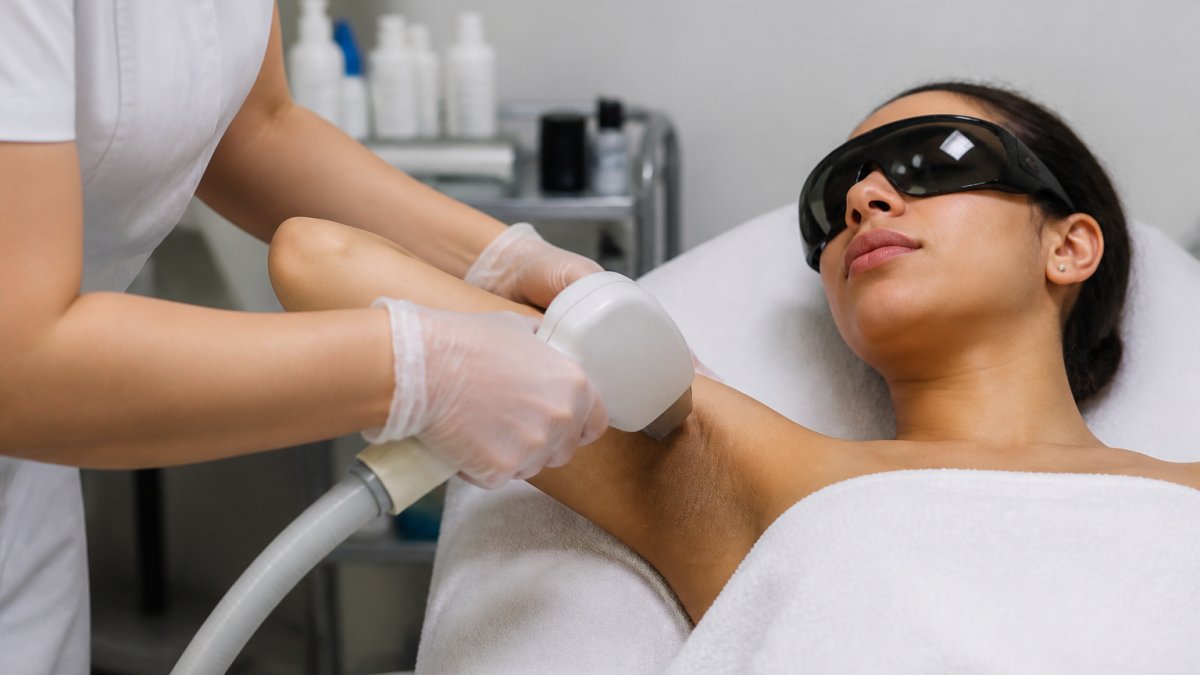
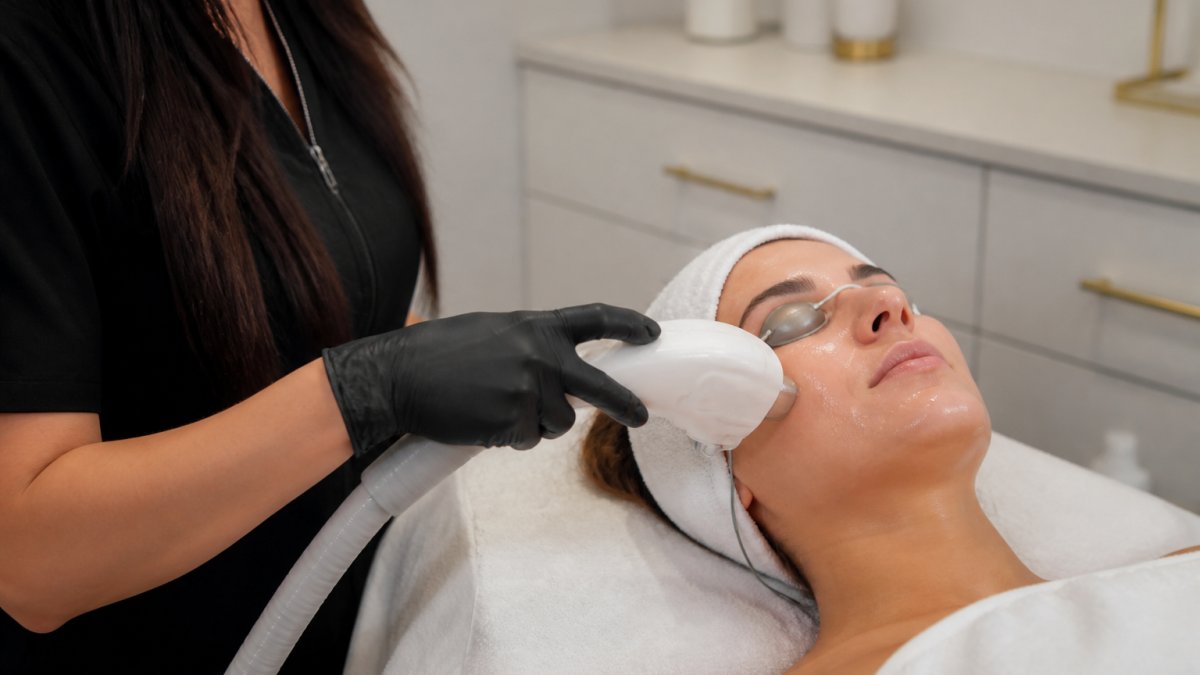
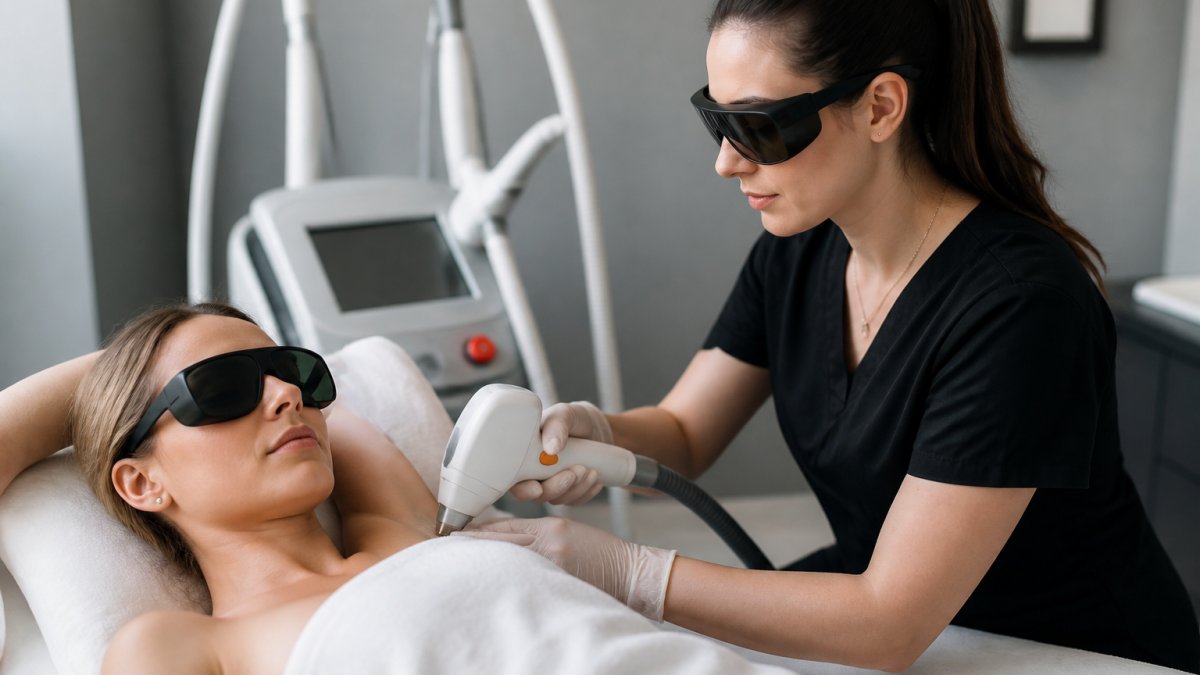
Short answer: usually not on the day of your appointment. Most providers will reschedule [laser hair removal](/post/best-laser-hair-removal-for-dark-skin-2026-guide) on tanned skin, and for good reason. A tan changes how your skin absorbs laser energy, and that shift raises the risk of burns and dark spots.
Laser hair removal is a cosmetic treatment that uses concentrated light to target pigment in hair follicles and slow future growth. The laser works by finding contrast: dark hair against lighter skin. According to the American Academy of Dermatology's guidance on laser hair removal, patients should avoid sun exposure and tanning beds before treatment, and your provider should review your skin before each session.
Here's the part most people get wrong: a tan isn't just a color change. It's active melanin production in your skin, and that melanin competes with your hair for the laser's attention.
How a Tan Changes Laser Hair Removal on Tanned Skin
A tan makes treatment riskier and less effective at the same time. Your skin holds more melanin after sun exposure or tanning bed use. The laser can't fully tell that pigment apart from the pigment in your hair.
Why Contrast Between Skin and Hair Matters
Laser targeting depends on skin and hair contrast. Dark hair absorbs the light, heats up, and damages the follicle. When your skin tone deepens, the surrounding tissue absorbs more energy too. That means less energy reaches the hair, and more lands where you don't want it.
Lighter skin with dark hair: strongest contrast, most predictable results
Tanned skin with dark hair: weaker contrast, higher risk
Deep skin tones: contrast is always tighter, so settings must be adjusted carefully
Burns, Hyperpigmentation, and Other Skin-Color Changes
The main side effects of treating tanned skin are burns, skin irritation, and pigmentation problems. Hyperpigmentation shows up as dark spots. Hypopigmentation shows up as light patches. Either can last weeks or, in rare cases, become a permanent skin change.
Watch Out Do not book a session right after a vacation, a beach day, or a tanning bed visit. Treating freshly tanned skin can cause burns and dark spots that outlast the hair you wanted gone.
How Long to Wait After Tanning for Laser Hair Removal
The honest answer is that there is no single number that fits every tan.
A practical way to think about it is by tan type and skin response, not by the calendar alone.
Tan scenario | Typical guidance | What your provider will check |
Brief sun exposure, no burn, light tan | Wait at least 2 weeks and until the tan fades | Whether pigment is still visible under clinic lighting |
Gradual tan from repeated outdoor time | Wait 2 to 4 weeks | Depth and evenness of pigment, recent UV history |
Sunburn, peeling, or blistered skin | Wait until fully healed, often 2 to 4 weeks | Skin barrier recovery, sensitivity, any pigment change |
Tanning bed use | Wait at least 2 weeks, longer for deeper color | Recent UV exposure and skin tone shift |
Self-tanner or spray tan | Wait until fully faded, often 1 to 2 weeks | Product residue and whether true skin tone is visible |
These are starting points, not guarantees. A light tan on fair skin may clear faster than a deep tan on olive or brown skin, and a provider may still postpone if any doubt remains.
A Simple Decision Path After Accidental Sun Exposure
If you catch too much sun before a session, do not wait until you are in the treatment room. Use this sequence:
Contact the clinic as soon as you know you were exposed.
Disclose the exposure honestly: when it happened, how long you were outside, whether you burned, and whether you used tanning beds or self-tanner.
Send a photo in natural light if the clinic asks for one.
Follow the clinic's advice: attend for assessment, or reschedule if they recommend it.
Do not try to scrub, peel, or bleach the tan off to make the appointment. Irritated skin is a bigger problem than a tan.
Most practitioners would rather move an appointment than treat skin that is still actively producing melanin. A short delay is cheaper than a burn or a dark patch that takes months to fade.
Watch Out If you are sunburned, blistered, or peeling, reschedule. Treating damaged skin raises the risk of burns, infection, and long-lasting pigment changes. A person applying broad-spectrum sunscreen to their arm before heading outdoors, with a laser hair removal clinic brochure on a nearby table Natural Tan vs. Self-Tanner: Different Timelines Natural tans and self-tanners are not the same problem. A real tan comes from melanin your skin produced, so it affects how the laser interacts with your tissue. Self-tanner mostly stains the surface layer of skin and usually fades faster, but it can still confuse a provider's skin assessment and leave residue that interferes with treatment preparation. Tan Type Typical Wait Why Light natural tan About 2 weeks Melanin needs time to fade Deep natural tan 2 to 4 weeks More pigment, more risk Sunburn Until fully healed Skin is damaged and sensitive Self-tanner or spray tan Until fully faded Surface stain can mislead assessment These are general guidelines, not rules. Your provider decides based on what they see, your skin tone, the laser being used, and the clinic's protocol. Self-Tanner Before Laser Hair Removal: What to Do Stop using self-tanner and spray tan well before your appointment. Most clinics ask you to skip it for at least two weeks so your true skin tone is visible. If you're unsure, call and ask. Exfoliate gently to help the color fade Skip new spray tan sessions until after your treatment course Tell your provider exactly when you last applied it Expect a patch test if your skin tone is deeper Take a photo of your bare skin in natural light a few days before your appointment. It helps you and your provider compare your real tone against any leftover tan.
Tanning After Laser Hair Removal: Protecting Your Results
Skip tanning and direct sunlight for at least two weeks after a session. Treated skin is more sensitive, and sun exposure can trigger dark spots in the exact areas you're trying to clear. Sun protection isn't optional during a treatment course.
Use broad-spectrum sunscreen with SPF 30 or higher daily
Cover treated areas with clothing when outdoors
Avoid tanning beds entirely during your course
Reapply sunscreen every two hours outdoors
Tanning after laser hair removal can undo weeks of progress. If you have a beach trip planned, schedule sessions around it, not before it.
What to Do After Accidental Sun Exposure
Call your provider and reschedule if you get sunburned or tanned before a session. Don't wait until you arrive. Honesty here protects your skin.
Mild pinkness: report it and let your provider assess
Red, tender, or blistered skin: reschedule until fully healed
Fresh tan without burn: your provider may still postpone
Most clinics would rather move an appointment than treat skin that isn't ready. A short delay beats a burn or a dark patch that takes months to fade.
How Laser Type and Skin Tone Affect Treatment Safety
Not every laser behaves the same way on tanned or deeper skin, and that is why the device matters as much as the operator.
A few broad patterns are worth knowing:
Nd:YAG lasers use a longer wavelength that penetrates more deeply and is less absorbed by surface melanin. They are often chosen for deeper skin tones and for patients with a recent tan, but settings still have to be adjusted.
Alexandrite lasers work quickly on light skin with dark hair, but their shorter wavelength is more readily absorbed by surface pigment, which raises the risk on tanned or deeper skin.
Diode lasers fall in between and are widely used, but suitability depends on the specific device, cooling, and provider settings.
Intense pulsed light (IPL) is not a laser and is generally more sensitive to skin tone and tan, so many clinics avoid it on recently tanned skin.
The takeaway is not that one device is safe and another is dangerous.
At PINK MINK NYC, our team tailors settings to each client's Fitzpatrick skin type, with focused experience in melanated skin and PCOS-related hair growth.
Aftercare and Warning Signs to Watch
After a session, treated skin is more sensitive to the sun and to irritation. Protect it deliberately:
Use broad-spectrum sunscreen with SPF 30 or higher on exposed treated areas every day.
Cover treated areas with clothing when outdoors, especially in the first two weeks.
Avoid tanning beds and direct sun for at least two weeks.
Skip hot tubs, saunas, and intense workouts that cause heavy sweating for the first 24 to 48 hours if your provider advises it.
Watch treated areas for signs that something is wrong. Redness and mild swelling are normal for a day or two. Anything beyond that needs a call:
Blistering or oozing
Spreading redness after 48 hours
Dark or light patches that appear and do not fade
Fever or increasing pain
Ask your provider before treatment which device will be used, what settings are planned for your skin tone, and what aftercare they recommend. A clinic that can answer those questions clearly is a clinic that is paying attention to your skin.
The best results come from honest timing: no tan before treatment, strict sun protection after, and a provider who adjusts settings to your skin tone.
Frequently Asked Questions
What happens if you get laser hair removal on tanned skin?
Treating tanned skin raises the risk of burns, blisters, and dark or light patches because the laser can target melanin in the skin instead of just the hair follicle. A tan also reduces the contrast between skin and hair, which can make treatments less effective. Most providers will reschedule until your tan fades, typically two weeks or more depending on how dark it is. A consultation and patch test help determine safe settings for your skin tone.
How long after tanning can I do laser hair removal?
Plan to wait at least two weeks after a natural tan fades before scheduling laser hair removal. Self-tanner usually needs about one to two weeks to fully shed, though this varies by product and skin type. Your provider may ask you to reschedule if any tan remains visible. Avoid sun exposure and tanning beds during your treatment course, and use broad-spectrum sunscreen with SPF 30 or higher on treated areas.
Does self-tanner affect laser hair removal?
Yes. Self-tanner temporarily darkens the skin's surface, which can interfere with how the laser targets hair and increase the risk of irritation or uneven results. Stop applying self-tanner at least one to two weeks before your appointment and gently exfoliate to help it fade. Tell your provider if you've used spray tan or self-tanner so they can assess your skin and adjust treatment settings or reschedule if needed.
Can I tan after laser hair removal?
Avoid direct sunlight and tanning beds on treated areas for at least two weeks after each session. Skin is more sensitive during a treatment course, and sun exposure can cause burns, dark spots, or skin discoloration. Use broad-spectrum sunscreen with SPF 30 or higher daily, wear protective clothing, and ask your provider when it's safe to resume tanning. Protecting your skin helps preserve your results and lowers the risk of side effects.
A tan and a laser appointment don't mix, but that doesn't mean you have to choose between sun and smooth skin. Plan your sessions around sun exposure, follow the waiting periods, and let a provider who knows melanated skin guide the settings. At PINK MINK NYC, we treat every client based on their Fitzpatrick skin type, with a lifetime satisfaction guarantee and a focus on PCOS-related hair growth. Book your consultation and we'll map out a treatment course that fits your skin and your schedule.
BOOK NOW
Comments