PCOS Hair Loss Management: A Practical Treatment Guide

Last Updated: November 16, 2026
Quick Summary
PCOS hair loss management works on three levers: lowering the androgen load, blocking androgen action at the follicle, and stimulating the follicle directly. Spironolactone, low-androgenic hormonal birth control, and topical minoxidil are the main medical options, supported by home habits like low-glycemic eating and exercise.
Spironolactone requires potassium monitoring and blood pressure checks, typically a baseline panel and a repeat after dose changes.
Topical minoxidil is the only FDA-approved topical for female pattern hair loss and works independently of hormones.
Visible regrowth typically takes several months, and stopping treatment usually reverses gains.
Early-stage thinning responds best to androgen control alone, while advanced loss usually needs minoxidil added.
Add one change at a time so you can tell what is working and what is causing side effects.
Ready to take control of PCOS hair growth?
Expert-led laser care for PCOS and melanated skin, tailored to your Fitzpatrick type.
Table of Contents
How PCOS Causes Scalp Hair Loss
Polycystic ovary syndrome (PCOS) is a hormonal condition in which the ovaries produce higher-than-typical levels of androgens, and it is one of the most common drivers of scalp hair thinning in women of reproductive age. PCOS hair loss follows a recognizable pattern, and understanding the mechanism is what separates effective PCOS hair loss management from guesswork. The Office on Women's Health overview of polycystic ovary syndrome describes PCOS as a lifelong condition that can be managed but not cured, which sets realistic expectations for anyone starting treatment.
Many people with hair thinning spend years cycling through shampoos and supplements without ever addressing the hormonal root. The good news: once you know what is actually happening at the follicle, the treatment path becomes far clearer. Below, we break down the mechanism, the diagnosis, and the treatments that hold up, so you can stop chasing symptoms and start targeting causes.
Androgen Excess and the Hair Follicle
Hair follicles respond to androgens differently depending on where they sit on the body. On the scalp, high androgen levels, particularly dihydrotestosterone, gradually shrink the follicle, shorten the growth phase, and produce finer, shorter strands until growth stops altogether. This is the same process that underlies female pattern hair loss, which is why PCOS-related thinning and androgenetic alopecia can look nearly identical on the scalp.
The paradox is that the same androgens that thin the scalp also drive hirsutism, unwanted facial and body hair. Many people with PCOS deal with both at once.
Symptoms, Scalp Patterns, and Getting a Diagnosis
The classic pattern is a widening part and crown thinning with the frontal hairline largely preserved, which is a hallmark of female pattern hair loss rather than the diffuse shedding seen in other conditions. Hair shedding may also increase, though true PCOS hair loss is driven more by follicle miniaturization than by shedding alone. A useful way to think about severity: early-stage thinning shows a slightly wider part that is hard to see in photos, moderate thinning shows visible scalp through the part and at the crown, and advanced thinning shows a broad, diffuse part with substantial crown exposure. Severity matters because it changes treatment planning, early loss responds best to androgen control alone, while advanced loss usually needs a follicle-stimulating agent such as minoxidil added to the plan.

Other signs worth tracking alongside scalp changes: irregular periods, acne, weight changes, and unwanted facial hair. None of these confirm PCOS on their own. A medical evaluation is the only way to know what you are dealing with. Signs that warrant prompt evaluation rather than watchful waiting include rapid shedding over weeks, patchy bald spots, scalp itching, burning, or redness, and any hair loss accompanied by fatigue, cold intolerance, or heavy periods.
Differential Diagnosis and Appropriate Testing
Self-diagnosis can miss the underlying cause. Differential diagnosis matters because several conditions mimic PCOS hair loss and require completely different treatment. A clinician will typically rule out: Once other causes have been ruled out, treatment can focus on PCOS-related hair loss while also considering broader strategies for managing PCOS without medication.
Iron deficiency and low ferritin, a common and reversible cause of shedding; ferritin is the stored-iron measure most practitioners check, and many aim for a mid-range ferritin rather than merely "normal" before attributing shedding to iron
Thyroid dysfunction, which produces diffuse thinning; thyroid-stimulating hormone (TSH) is the usual first test, with free T4 added when TSH is abnormal
Telogen effluvium, triggered by illness, surgery, childbirth, severe stress, or rapid weight loss, and typically diffuse rather than patterned
Nutrient deficiency in zinc, vitamin D, or protein
Androgen-secreting tumors, rare but serious, suggested by rapid virilization such as voice deepening or clitoromegaly
Alopecia areata, an autoimmune cause that produces smooth patches rather than patterned thinning
Scarring alopecias, which destroy follicles permanently and require biopsy for confirmation
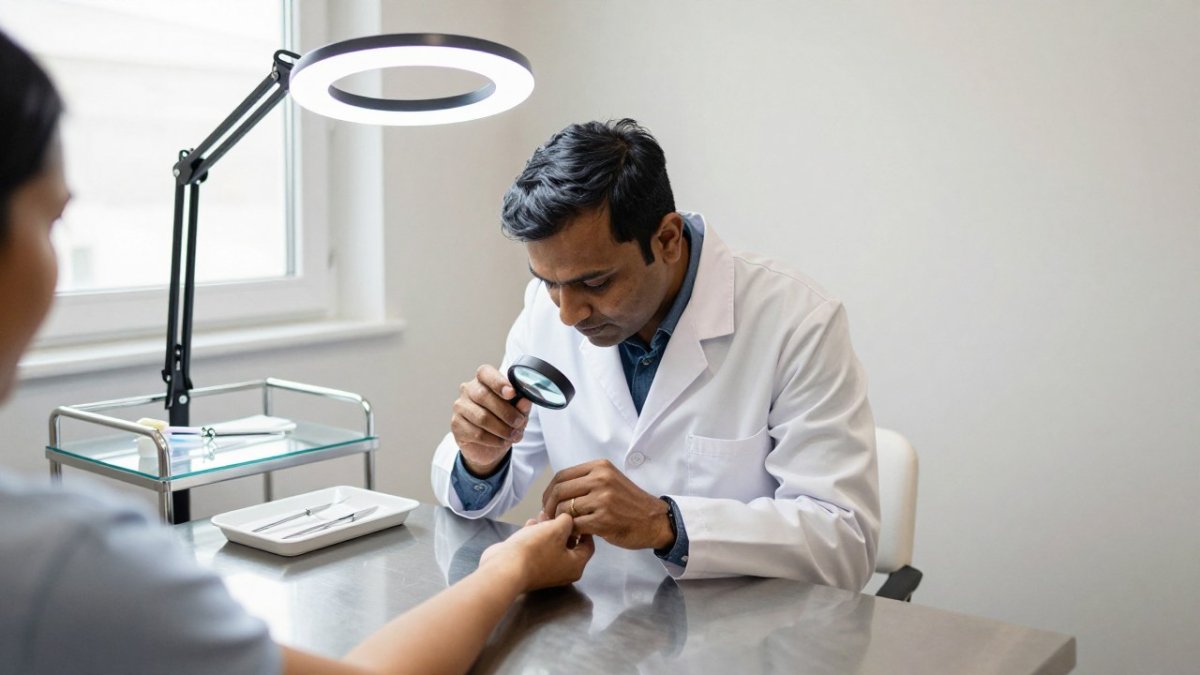
Appropriate testing usually includes a hormonal panel (total and free testosterone, DHEA-S, and sometimes androstenedione), ferritin, TSH, and a review of your menstrual history. A scalp examination, sometimes with dermoscopy, helps confirm whether miniaturization is present, dermoscopy can show hair-diameter diversity, a hallmark of androgenetic alopecia, and help distinguish it from telogen effluvium, where diameters are uniform. A pull test can estimate how many hairs are actively shedding. The practical takeaway: a diagnosis built only on symptoms is a guess, and the tests above are what separate a treatable mimic from true PCOS-related thinning.
American Academy of Dermatology guidance on hair loss in women
Medical Treatments for PCOS Hair Loss
Medical treatment for PCOS-related thinning generally works on three levers: lowering the androgen load, blocking androgen action at the follicle, and stimulating the follicle directly. Treatment decisions should be made with a qualified clinician.
Anti-Androgens, Hormonal Birth Control, and Minoxidil
Spironolactone is the most widely used anti-androgen in the United States. It blocks androgen receptors and reduces androgen production. Because it is a potassium-sparing diuretic, it requires potassium monitoring and blood pressure checks, typically a baseline panel and a repeat after starting or changing dose. It is not appropriate during pregnancy, it can affect male fetal development, so pregnancy precautions are essential, and reliable contraception is part of the plan for anyone who could become pregnant. Common side effects include breast tenderness, irregular periods, and lightheadedness; most practitioners start low and titrate. Hormonal birth control, particularly a low-androgenic-potential contraceptive, can lower circulating androgens and is often paired with spironolactone; combined pills are the usual choice, and progestin-only methods vary in their androgen profile. Minoxidil, applied as a topical treatment, extends the growth phase and is the only FDA-approved topical for female pattern hair loss. It works independently of hormones, which is why it complements anti-androgen therapy rather than replacing it.
Watch out: starting spironolactone without a baseline potassium check, or continuing it into a pregnancy, are the two most common and most avoidable safety errors.
Treatment options are supported by different levels of evidence, and a qualified clinician can explain how these apply to an individual's situation.
American Academy of Dermatology guidance on hair loss in women
For readers also managing excess facial or body hair, our guide to why PCOS causes excessive hair growth explains the other side of androgen excess, and our complete guide to laser hair removal for PCOS covers how light-based treatment fits into a broader plan.
Here is how the main medical options compare on what they do and what to watch for.
Option | How it works | Key safety note |
Spironolactone | Blocks androgen receptors and reduces androgen production | Requires potassium monitoring and blood pressure checks |
Hormonal birth control | Lowers circulating androgens; often paired with spironolactone | Combined pills are the usual choice |
Topical minoxidil | Extends the growth phase; works independently of hormones | Only FDA-approved topical for female pattern hair loss |
PCOS Hair Loss Treatment at Home
Home management supports medical treatment; it does not replace it. The habits that make a measurable difference are unglamorous and consistent:
A balanced diet built around low-glycemic foods, adequate protein, and enough calories to avoid triggering shedding
Exercise most days, which improves insulin resistance, a core driver of hyperandrogenism
Stress management, since chronic stress worsens shedding
A gentle hair-care routine with a moisturizing shampoo, no tight styles, and minimal heat
Early intervention the moment you notice a widening part
Diet deserves particular attention because it influences both hormones and scalp health. Our article on how diet affects your skin covers what helps and what hurts.
PCOS Hair Loss Supplements and What the Evidence Shows
Supplements are most relevant when a deficiency has been confirmed by testing. Discuss any supplement with a qualified clinician before starting it.
Is PCOS Hair Loss Reversible?
PCOS hair loss is often partially reversible, but rarely fully. Outcomes vary between individuals, and a qualified clinician can advise on what improvement may look like in a specific case.
PCOS Hair Loss Regrowth: Timelines and What to Measure
Expect gradual change. **Visible regrowth typically takes several months, and results vary by individual. Measure the same way each time: photograph your part under identical lighting, track part width, and count strands on a pillowcase. Treatment response varies by medication, adherence, and how long the loss has been active. Stopping treatment usually reverses gains, so long-term maintenance is part of the plan.
Watch out: starting three products at once makes it impossible to tell what is working and what is causing side effects. Add one change at a time.
Book a PCOS-Focused Consultation at Pink Mink NYC
Managing PCOS hair loss is a long game, and the facial and body hair side of androgen excess deserves the same attention. At PINK MINK NYC, our clinic, led by Dr. Syed, focuses on PCOS and melanated skin, with treatments tailored to individual Fitzpatrick skin types. We also offer a clear guide to booking your laser session so you know exactly what to expect. Learn more about why clients trust PINK MINK NYC before you schedule.
Hormonal hair growth does not have to run your routine. Get started with PINK MINK NYC and build a plan that treats the cause, not just the surface.
Frequently Asked Questions
Is hair loss from PCOS reversible?
It can be partially reversible, but the word to focus on is partially. PCOS hair loss usually follows a female pattern hair loss (androgenetic alopecia) course, where follicles shrink rather than disappear. Lowering androgen exposure with treatments like spironolactone or certain hormonal birth control, plus minoxidil, can slow shedding and support regrowth in many people. Follicles that have been miniaturized for years respond less. Starting treatment early gives you the best chance of visible improvement, so a medical evaluation is the right first step.
How long does it take to see regrowth from PCOS hair loss treatment?
Expect a slow timeline. Hair growth is gradual, and follicles need several cycles to thicken. Results are usually judged over a period of months, and a clinician can advise on the appropriate timeline. Early on you may notice less shedding before you notice new growth. Photograph your part and crown in the same lighting each month so you have something measurable to compare at follow-up.
Do PCOS hair loss supplements actually help?
Supplements are most relevant when they correct a confirmed deficiency, so testing before supplementing makes sense. Tell your clinician about everything you take, because some supplements interact with anti-androgens and hormonal birth control.
Can I manage PCOS hair loss at home?
Home care supports treatment but does not replace it. A balanced, low-glycemic diet, regular protein intake, strength and cardio exercise, stress management, and good sleep all help with the insulin resistance that drives androgen excess. Gentle hair care matters too: a moisturizing shampoo, no tight styles, and limited heat. If you also deal with unwanted facial or body hair,
What causes hair thinning with PCOS?
The main driver is androgen excess. In PCOS, ovaries and adrenal glands produce more androgens, and insulin resistance raises them further. Dihydrotestosterone (DHT) binds to follicles on the scalp and gradually miniaturizes them, so strands grow thinner and shorter until the scalp shows through, especially along the part and crown. That is why treatment targets hormones, not just the scalp.
Is PCOS hair loss permanent?
It is not permanent in the way scarring hair loss is, but it is long-term and tends to return if treatment stops. The follicles are still there, just miniaturized. That means improvement is possible with ongoing treatment, and maintenance is part of the plan. Stopping spironolactone or minoxidil usually leads to shedding within months. Think of management as a steady routine rather than a course you finish.
Comments