Real Benefits of Non-Ablative Laser Skin Resurfacing

Last Updated: November 21, 2026
Quick Summary
Non-ablative laser skin resurfacing sends targeted heat into deeper skin layers while leaving the surface intact, stimulating collagen production for gradual improvements in texture, tone, and fine lines. Because the surface stays intact, recovery is shorter and downtime minimal, though results build over a series of sessions rather than appearing at once.
The laser heats the dermis to nudge fibroblasts into producing fresh collagen over weeks and months.
Non-ablative resurfacing suits mild to moderate concerns, not deep folds or severe damage.
Fractional delivery treats skin in tiny columns, speeding healing and lowering pigment risk.
A typical course is three to five sessions spaced several weeks apart.
Results fade without daily sunscreen, since sun exposure accelerates their loss.
Is non-ablative laser right for your skin?
PINK MINK NYC tailors laser treatments to your skin type and concerns.
Table of Contents
What Non-Ablative Laser Resurfacing Does for Your Skin
Non-ablative laser skin resurfacing is a minimally invasive treatment that sends targeted heat into the deeper skin layers while leaving the skin surface intact.

That distinction matters. Because the surface stays intact, recovery is shorter and the risk profile is different from ablative treatments.
Non-ablative laser skin resurfacing generally centers on collagen, texture, and tone rather than wholesale skin removal.
How Targeted Heat Stimulates Collagen Production
Collagen production is the engine behind every result you see.
This process is called collagen remodeling. It is not instant. New collagen accumulates gradually, which is why most people notice improvement in skin texture and firmness several weeks after a session rather than the next morning.
A common mistake is judging a non-ablative treatment by what you see on day three. The real change is happening underneath, and it takes time to surface.
Benefits by Skin Concern: Realistic Results
Not every concern responds the same way, and honest expectations are the difference between satisfaction and disappointment. Non-ablative resurfacing tends to deliver meaningful but moderate improvement, best suited to mild to moderate concerns rather than severe damage.
Here is how the main benefits break down by concern.
Skin Concern | Typical Improvement | Realistic Expectation |
Fine lines and wrinkles | Moderate softening | Best on early signs of aging, not deep folds |
Uneven skin tone | Noticeable evening out | Gradual, builds across sessions |
Sun damage and pigmentation | Partial fading | Requires sun protection to hold results |
Mild acne scars | Softening of texture | Works on mild scars, not deep pitting |
Overall skin texture | Smoother feel | Often the most reliable benefit |
Fine Lines, Wrinkles, and Early Signs of Aging
Fine lines and early wrinkles are where non-ablative laser treatment earns its reputation. The collagen boost plumps the skin slightly and softens the crepey texture that shows up first around the eyes and mouth.
What most guides miss is the ceiling here. This is not a deep-wrinkle fix. If you have significant folds or laxity, a provider will likely discuss other options.
Sun Damage, Pigmentation, and Uneven Skin Tone
Sun damage and pigmentation respond well to non-ablative resurfacing, though patience is required. Photoaging shows up as uneven skin tone, brown spots, and a dull surface, and the laser works on these by encouraging cell turnover and collagen growth over a series of sessions.
One caveat we always raise: results fade fast without sun protection. For readers managing sun damage at home between treatments, our guide on how to treat sun damage on your face step by step walks through a practical routine.
American Academy of Dermatology guidance on laser resurfacing
Types of Non-Ablative Lasers and How to Choose
Choosing a laser type comes down to your skin concern and your skin tone, not to which device sounds most advanced. Non-ablative options are commonly grouped into a few device families, each with a different target and depth of penetration. Understanding the categories, and the fractional versus non-fractional distinction, is what lets you ask better questions at a consultation.
Fractional versus non-fractional delivery
Non-ablative lasers are delivered in one of two ways. Non-fractional devices treat the entire surface in a single pass, which can be effective but tends to carry more downtime and a higher pigment risk. Fractional devices treat the skin in tiny columns, leaving surrounding tissue intact; that untreated tissue speeds healing and lowers the risk profile, which is why fractional delivery dominates modern non-ablative practice. The trade-off is that fractional treatments typically require a series rather than a single session to reach the same cumulative effect.
The main non-ablative laser families
Non-ablative fractional lasers (commonly 1440 nm, 1540 nm, and 1550 nm wavelengths): treat the skin in microscopic columns and target water in the dermis. They are generally used for texture, fine lines, and tone. Because they leave the surface intact, downtime is usually a few days of redness rather than a week of peeling.
Nd:YAG lasers (commonly 1064 nm): penetrate deeper and interact less with surface pigment, which is why they are often chosen for darker skin tones and for concerns like texture and mild scarring.
Pulsed dye lasers (commonly 585-595 nm): target hemoglobin rather than water, so they are chosen for redness, flushing, and some vascular concerns rather than for collagen remodeling.
How wavelength and settings affect suitability
Wavelength determines what the laser targets and how deep it reaches. Shorter wavelengths interact more with surface pigment, which raises the risk of post-inflammatory hyperpigmentation in darker skin; longer wavelengths bypass surface pigment and reach the dermis more safely in those skin types. Settings matter just as much: fluence (energy per area), pulse duration, and the density of fractional columns all change the balance between result and risk.
A practical selection framework
Start with the concern. Texture, fine lines, and mild scarring point toward a non-ablative fractional device. Redness points toward pulsed dye or IPL. Pigment points toward a device or setting chosen for pigment, with sun protection built in.
Then filter by skin tone. Darker skin narrows the field toward longer wavelengths and conservative settings, and raises the value of a provider experienced with melanated skin.
Then weigh downtime. Fractional delivery usually means a few days of redness; non-fractional delivery can mean more. Match the device to the recovery window you can actually accept.
Then confirm the provider's experience with that specific device. Device brand matters less than the operator's judgment about settings and endpoints.
When evaluating a clinic, ask why a given device and setting were chosen for your skin, and what the alternatives were.
American Academy of Dermatology guidance on laser resurfacing
Ablative vs. Non-Ablative Laser Resurfacing
The core difference between ablative vs. non-ablative laser resurfacing is whether the laser removes the top layer of skin. Ablative resurfacing strips the surface for dramatic results and a longer recovery.
Factor | Non-Ablative | Ablative |
Skin surface | Left intact | Removed |
Results | Gradual, moderate | Dramatic, faster |
Downtime | Minimal | Significant |
Sessions needed | Several | Often fewer |
Best for | Mild to moderate concerns | Severe damage, deep wrinkles |
Neither is "better." Ablative wins on intensity; non-ablative wins on convenience and lower risk. For most people with mild to moderate concerns who cannot disappear for a week, non-ablative is the practical pick.
Non-Ablative Laser Recovery and Downtime
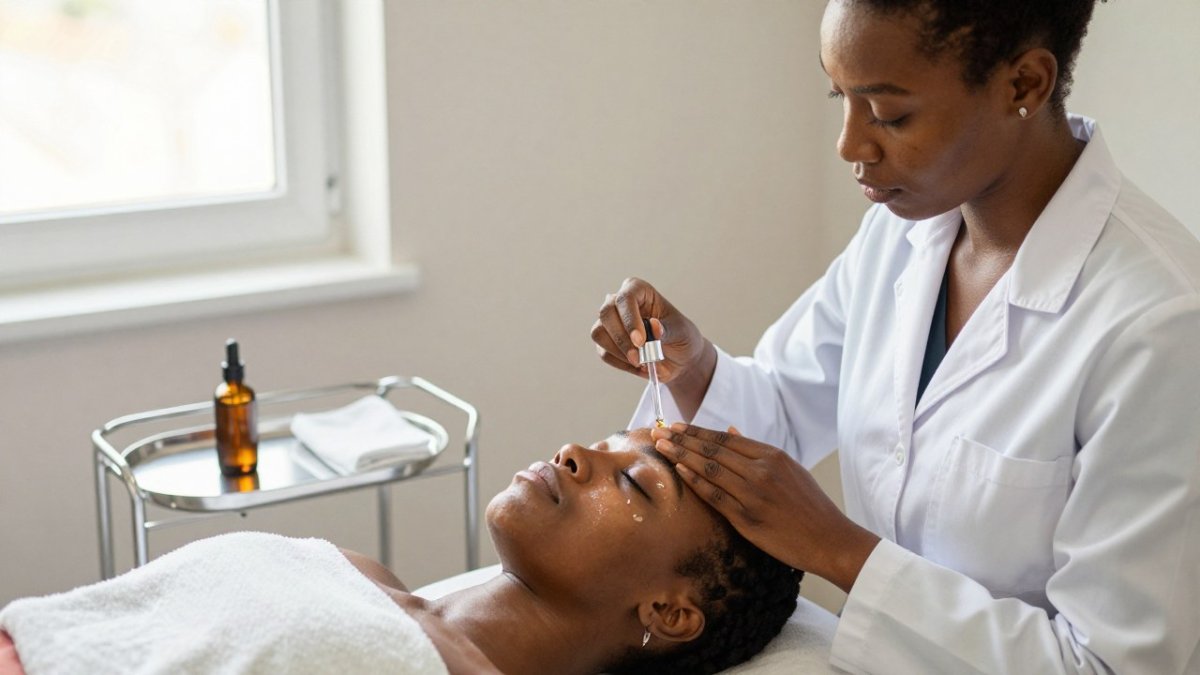
Non-ablative laser recovery is short compared with ablative treatments. Most people return to normal activity the same day or the next, with mild redness and warmth that settles within a day or two.
Side effects are usually temporary: redness, slight swelling, and sensitivity. The skin may feel tight or dry for a few days.
Anyone prone to keloids should raise it before treatment. Our article on whether you can prevent keloids after skin procedures covers the precautions worth discussing at consultation.
Non-Ablative Laser Before and After: What Results Look Like
Non-ablative laser before and after results are subtle by design. You should expect smoother skin, more even tone, and a fresher appearance rather than a transformed face. The change is real, but it reads as "you, on a good day" rather than "you, different." What most guides leave out is the timeline: when the change appears, how a course of sessions compounds, and why a single treatment rarely tells the whole story.
The treatment timeline
A typical non-ablative course is a series of sessions spaced several weeks apart, commonly three to five sessions, with intervals set by the device and the intensity of each treatment. The spacing is not arbitrary: collagen remodeling takes weeks, and the skin needs to recover between sessions before the next round of controlled injury. A provider may recommend a shorter or longer series depending on the concern, the device, and how your skin responds.
When changes appear
Days 1-3: redness and warmth settle; the skin may feel tight or dry. This is recovery, not result.
Weeks 2-4: early changes in texture and tone may become visible as surface cells turn over.
Weeks 4-12 and beyond: collagen continues to accumulate, and firmness and fine-line softening build gradually. This is why photographic comparison at consistent intervals is more honest than judging in the mirror week to week.
What before-and-after photos should show
Honest before-and-after images are taken in consistent lighting, at consistent angles, and at consistent intervals, not on the day of treatment versus a good-lighting day weeks later. Look for changes in texture, pore appearance, and tone evenness rather than dramatic contour changes, which non-ablative treatment does not deliver. Ask whether the images show a full course or a single session; a single-session photo set is a weak basis for expectation.
Why a series, not a session, is the unit of results
The cumulative effect is the point. Each session adds a layer of collagen remodeling, and the visible change typically compounds across the course rather than appearing after the first treatment.
Watch out: results that fade quickly after a course usually point to unprotected sun exposure rather than a failed treatment. Daily sunscreen is part of the result, not an optional add-on.
Skin Tone, Pigment Risk, and Who Is a Good Candidate
Candidacy for non-ablative resurfacing is determined by a qualified professional after assessing your skin, concerns, and expectations.
Skin tone is the factor that deserves the most attention. Darker skin carries a higher risk of dyspigmentation, meaning the laser can trigger dark or light patches if the wrong device or settings are used.
The business describes its approach as tailored to individual Fitzpatrick skin types, a focus it highlights for melanated skin. For a closer look at how one laser technology performs on melanated skin, read the benefits of Nd:YAG laser for melanated skin.
Booking a Non-Ablative Laser Consultation at Pink Mink NYC
A consultation is where a good outcome actually starts.
A consultation with a qualified professional is where your skin type and concerns should be assessed before treatment.
Ready to talk through your options? Learn more about PINK MINK NYC and what our clinic offers, then start your consultation through our main clinic page.
The hardest part of laser resurfacing is not the treatment itself. It is sorting hype from reality before you commit.
Frequently Asked Questions
Is non-ablative laser resurfacing worth it?
It depends on what you want to change. Non-ablative laser is worth it if your goals are smoother texture, softened fine lines, more even tone, or gradual improvement in mild acne scars, and you prefer little downtime over one aggressive session. Results build across a series of treatment sessions rather than appearing overnight, and collagen remodeling continues for weeks after each visit. If you want dramatic single-treatment change, an ablative approach may be more appropriate. A consultation can confirm which fits your skin.
How many non-ablative laser treatments are needed to see results?
Most non-ablative laser protocols use a series of treatment sessions spaced several weeks apart, with visible changes often appearing after the first few visits and continuing to improve as collagen production builds. The exact number depends on your skin concern, the laser type used, and how your skin responds. Pigmentation and texture typically need more sessions than early fine lines. Your provider should set a realistic schedule at your consultation and adjust it based on how your skin is responding.
What are the risks or side effects of non-ablative laser resurfacing?
Common short-term effects include redness, mild swelling, and warmth in the treated area for a few hours to a few days. Less common risks include blistering, infection, and pigment changes such as darkening or lightening, which is why skin tone assessment matters before treatment. People with darker skin or a history of melasma need an individualized plan and a provider experienced with melanated skin. Anyone with active acne, infection, or recent sun exposure may be asked to wait.
How long does non-ablative laser recovery take?
Non-ablative laser recovery is usually short compared with ablative resurfacing. Many people return to normal activities the same day or within one to three days, with redness that can be covered with makeup after the first day or so. Strenuous exercise, saunas, and direct sun exposure are typically avoided for about a week. Because the skin surface stays largely intact, healing is faster, but you still need daily sun protection to protect your results.
Comments