Signs Laser Hair Removal Is Working Correctly

Table of Contents
How to Know Laser Hair Removal Is Working
Understanding the Laser Hair Removal Shedding Process
What Shedding Looks Like
Timeline for Shedding After Treatment
Laser Hair Removal Timeline: When You'll See Results
First Session to Three Sessions
Long-Term Hair Reduction
Skin Reactions That Signal Success
Perifollicular Oedema and Histamine Response
Redness and Inflammation as Treatment Indicators
Laser Hair Removal for PCOS: What to Expect
Why Multiple Sessions Are Needed
Hair Growth Cycles and Treatment Response
How Hair Density Decreases Over Time
Post-Treatment Aftercare to Maximize Results
Troubleshooting: When Results Aren't Showing
Frequently Asked Questions
Last Updated: September 29, 2026
How to Know Laser Hair Removal Is Working
Laser hair removal works by targeting pigment in hair follicles and damaging them so hair stops growing back. But how do you know if the treatment is actually doing its job? At PINK MINK NYC, we help patients understand what success looks like during their treatment journey.
The truth is, signs laser hair removal is working correctly aren't always obvious right away. Some changes happen immediately after your first session. Others take weeks or multiple treatments to become visible. Knowing what to expect prevents frustration and helps you stay committed to your treatment plan.
Most people expect smooth skin right after their appointment. That's not how it works. Your skin goes through a process. Hair doesn't vanish instantly. Instead, it sheds over the next 1-3 weeks. Your skin may look red or bumpy for a few days. These reactions are actually good signs. They mean the laser is doing what it should.
Understanding the Laser Hair Removal Shedding Process
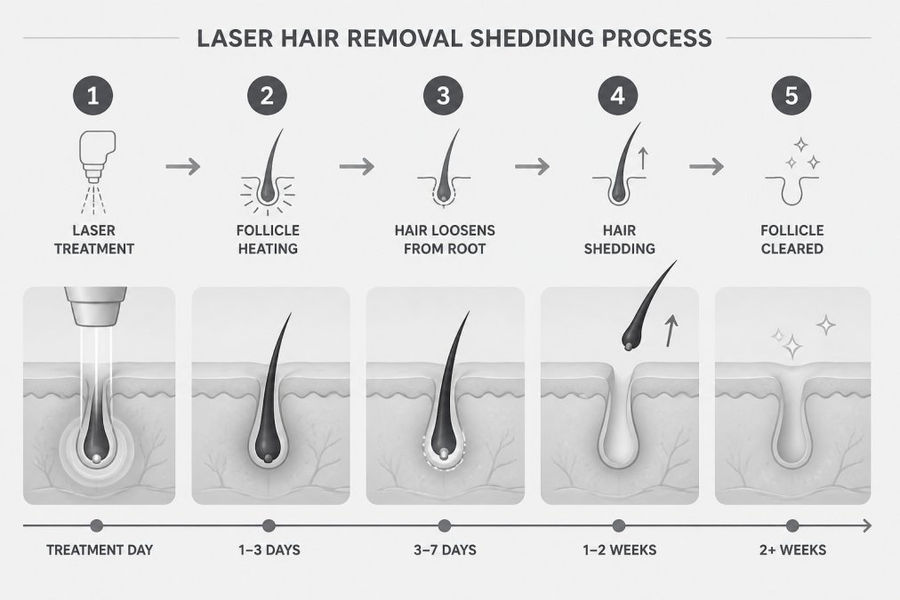
After laser treatment, your hair doesn't simply disappear. The laser damages the follicle, but the hair shaft still needs to come out. This is called shedding, and it's one of the clearest indicators that treatment worked.
What Shedding Looks Like
Shedding typically starts 5-14 days after your appointment. The hairs begin to loosen in the follicle. You'll notice them falling out when you shower or touch the treated area. They come out easily with minimal pulling.
The shed hairs look different from normal hair loss. They're often shorter and thinner than your regular hairs. Some appear almost like fine dust or powder when they fall out. This happens because the laser weakened the hair at the root level.
You won't see all hairs shed at once. Shedding happens gradually over several weeks. By week three, most of the treated hairs should be gone. This gradual process is normal and expected.
Timeline for Shedding After Treatment
The shedding timeline is consistent across most people, though individual variation occurs based on hair type and skin tone.
Days 1-3: Minimal shedding. Skin may be red or slightly swollen.
Days 5-7: Shedding begins. Hairs loosen noticeably.
Days 7-14: Peak shedding period. Most treated hairs fall out.
Weeks 3-4: Shedding slows. Remaining hairs continue to shed.
Week 4+: Shedding complete. Treated area should be mostly hair-free.
This timeline assumes you followed post-treatment care instructions. Proper aftercare speeds up the process and reduces complications.
Laser Hair Removal Timeline: When You'll See Results
Results don't happen overnight. Hair grows in cycles, and the laser only affects actively growing hairs. This is why multiple sessions are necessary. Each session targets a new batch of hairs entering the growth phase.
First Session to Three Sessions
After your first session, you'll see a noticeable reduction in hair density. The treated area will have significantly fewer hairs than before. However, this isn't permanent yet. Some hairs will regrow because they weren't in the right growth cycle when treated.
By session two, the difference becomes more dramatic. Regrowth is lighter and thinner than before. Hair takes longer to return. Many patients report that the treated area stays smooth for 3-4 weeks between sessions.
Session three is where the real transformation happens for most people. At this point, many patients see 80-90% hair reduction. The remaining hairs are typically fine and sparse. For some people, results are nearly complete by session three.
Long-Term Hair Reduction
Continuing beyond three sessions provides cumulative benefits. Each session targets more hairs and weakens the follicle further. By session six, most patients achieve 90%+ permanent hair reduction.
"Long-term" doesn't mean permanent in every case. Some follicles may eventually produce fine hairs again, especially in hormone-sensitive areas. However, regrowth is minimal and can be managed with occasional maintenance sessions.
The laser hair removal timeline varies based on several factors. Hair color, skin tone, and hormonal factors all play a role. Patients with PCOS may need additional sessions because hormones stimulate continued hair growth. Despite this, even PCOS patients see dramatic improvement with consistent treatment.
Skin Reactions That Signal Success
Your skin's reaction to laser treatment tells you something important: the laser is penetrating the follicle. Certain reactions are signs the treatment is working as intended.
Perifollicular Oedema and Histamine Response
Perifollicular oedema is mild swelling around the hair follicle immediately after treatment. You'll notice small bumps surrounding each treated hair. These bumps are typically red or pink and may feel slightly warm.
This reaction happens because the laser creates thermal damage in the follicle. Your body's natural response is inflammation. Histamine releases from immune cells, causing localized swelling and redness.
This is not a bad reaction. It's actually a sign the laser reached the target. When you don't see perifollicular oedema, it may mean the laser settings weren't strong enough or your skin didn't respond as expected.
The swelling usually fades within 24-48 hours. Redness may persist for 3-7 days. Some patients experience mild itching during this period. These symptoms are temporary and manageable with proper aftercare.
Redness and Inflammation as Treatment Indicators
Post-treatment redness is expected and normal. Your skin experiences controlled thermal injury. The body responds by increasing blood flow to the area. This causes the characteristic red or pink appearance.
The intensity of redness varies. Darker skin tones may show less visible redness but still experience the same treatment effect. Lighter skin shows more dramatic redness, which fades as inflammation subsides.
Redness that lasts 1-2 weeks is typical. Beyond that timeframe, contact your provider. Excessive inflammation may indicate a reaction or improper technique.
Mild inflammation is therapeutic. It means your immune system is responding to the follicle damage. This response is necessary for long-term hair reduction.
Laser Hair Removal for PCOS: What to Expect
Patients with PCOS face unique challenges with hair removal. Elevated androgens stimulate continuous hair growth. This means treated follicles may eventually produce new hairs because hormones keep pushing growth signals.
Despite this, laser hair removal works well for PCOS. The key difference is maintenance. PCOS patients typically need occasional touch-up sessions after completing their initial series. (Source: consumer trends in aesthetic procedures)
Results still appear on the same timeline as non-PCOS patients. You'll see shedding after 5-14 days. Hair density decreases noticeably after each session. By session three, most PCOS patients see 70-85% reduction.
The difference emerges over time. While non-PCOS patients might maintain results for years with occasional touch-ups, PCOS patients may need sessions every 6-12 months. This is not a failure of treatment. It's a reflection of ongoing hormonal stimulation.
At PINK MINK NYC, we specialize in laser hair removal for PCOS patients. Our approach accounts for hormonal factors and adjusts treatment accordingly.
Why Multiple Sessions Are Needed
Hair doesn't grow all at once. Your body cycles hair through different growth phases. Only hairs in the active growth phase respond to laser treatment.
Hair Growth Cycles and Treatment Response
Hair grows in three phases: anagen, catagen, and telogen. The anagen phase is when hair actively grows. During this phase, the hair is firmly attached to the follicle and contains maximum pigment. This is when the laser works best.
How Hair Density Decreases Over Time
After session one, hair density drops noticeably. You've eliminated the first batch of actively growing hair. However, dormant hairs begin waking up. Some regrowth occurs within weeks.
Post-Treatment Aftercare to Maximize Results
What you do after treatment matters as much as the treatment itself. Proper aftercare speeds up shedding and reduces complications.
Pro Tip Skip exfoliating the treated area for at least one week. Your skin is sensitive after laser treatment. Exfoliation can cause unnecessary irritation and delay healing.
Troubleshooting: When Results Aren't Showing
Sometimes patients don't see expected results. This happens for several reasons. Identifying the cause helps you adjust your approach.
Key Takeaway Signs laser hair removal is working correctly include shedding 5-14 days after treatment, visible hair density reduction after each session, and expected skin reactions like mild redness and perifollicular oedema. Multiple sessions are necessary because hair grows in cycles, and only actively growing hairs respond to laser treatment.
Frequently Asked Questions
How can I tell if my laser hair removal is working?
The most reliable sign is the shedding process that occurs 5-14 days after treatment, where hair falls out from the root. You should also notice slower regrowth with each session, finer hair texture, and reduced hair density. Skin reactions like mild redness and perifollicular oedema (small bumps around follicles) indicate the laser energy reached the hair follicle. If you see none of these signs after multiple sessions, consult your provider about treatment settings or skin type compatibility.
Will I notice a difference after 3 sessions of laser hair removal?
Most people see significant results after three sessions, though results vary based on hair color, skin tone, and hair growth cycle. After three sessions, expect 60-80% reduction in hair density with noticeably finer, sparser regrowth. The laser hair removal timeline typically shows visible improvement after the first session, with dramatic changes by session three. However, achieving complete results may require additional maintenance sessions depending on your individual response and hair characteristics.
What does the laser hair removal shedding process look like?
Shedding begins 5-14 days after treatment as hair falls out from the root. Unlike normal hair loss, post-laser shedding appears as short, thin hairs that come out easily when you gently rub the treated area. The hairs may look charred or darkened at the root. This shedding phase lasts 1-2 weeks and is one of the clearest signs the laser energy successfully damaged the hair follicle and the treatment worked as intended.
Why am I still getting hair growth after laser treatment?
Hair regrows because not all follicles are in the anagen (active growth) phase during each session, and hormonal factors like PCOS can stimulate new hair growth. Additionally, some follicles may require higher fluence or multiple passes to achieve thermal damage. If regrowth is patchy or thicker than expected, factors like inadequate post-treatment care, sun exposure, or individual skin sensitivity may be limiting results. Discuss your specific situation with your provider to adjust treatment parameters or timing between sessions.
BOOK NOW


Comments