Benefits of Threading for Fine Facial Hair

Last Updated: November 9, 2026
Quick Summary
The benefits of threading for fine facial hair include precision shaping along the brow, lip, and jaw, root-level removal that keeps skin smooth longer than shaving, and no chemicals such as wax, resins, or fragrance. Threading also grabs fine vellus hair that wax cannot, and most facial areas take minutes.
Threading removes hair at the root using a twisted cotton thread, not wax or chemicals.
Threading does not increase facial hair growth or change how many follicles you have.
Threaded regrowth keeps its natural tapered tip, so it tends to feel softer as it comes in.
Avoid makeup, touching, and products on treated skin for the first 2 hours.
The upper lip is the most sensitive facial area for threading, with sharp but quick stings.
Tired of peach fuzz that wax just misses?
PINK MINK NYC offers precise facial threading and expert skin care tailored to your skin type.
Table of Contents
What Facial Threading Does to Fine Facial Hair
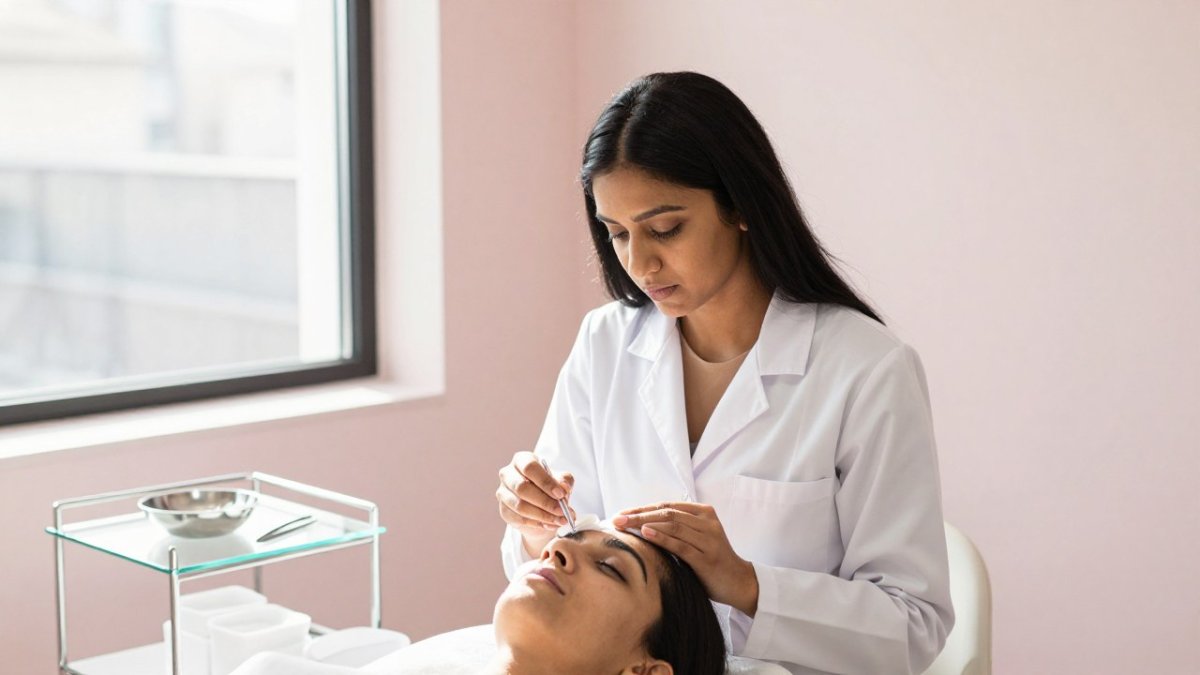
Threading removes hair at the root using a twisted cotton thread (Threading: A Timeless Method for Facial Hair Maintenance and Potential Complications). The technique can lift vellus hair, the soft peach fuzz many people have on their cheeks, jawline, and upper lip, from the follicle.
Here is the mechanism. A practitioner twists a loop of cotton thread and rolls it across the skin. The twist traps hairs and pulls them out from the root. Because the thread works along the skin's surface, it can grab very short, very light hairs.

The Benefits of Threading for Fine Facial Hair
Threading offers precision, root-level removal, and no chemicals, which many people find suitable for fine facial hair and sensitive skin.
The main benefits:
Precision. The thread shapes clean lines along the brow, lip, and jaw.
Root-level removal. Hair comes out from the follicle, so skin can feel smooth for longer than with shaving.
No chemicals. No wax, no resins, no fragrance.
Works on short hair. Threading grabs fine vellus hair that wax cannot.
Fast sessions. Most facial areas take minutes, not hours.
If your goal is longer-term smooth skin, it helps to see how threading fits into a broader hair-free lifestyle plan.
Does Threading Increase Facial Hair Growth?
No. Threading does not increase facial hair growth, and it does not change how many follicles you have. This is one of the most common myths we hear, and the biology behind it is straightforward once you separate three things people tend to blur together: density, rate, and texture.
Density is fixed. You are born with a set number of hair follicles, and removing hair at the root does not create new ones. Threading pulls the hair shaft out of the follicle; it does not stimulate the follicle to produce more hairs or switch dormant follicles on.
Rate is hormonal, not mechanical. How fast facial hair grows back is driven mainly by hormones and genetics, not by how you remove it. Shaving, waxing, and threading all leave the follicle intact, so none of them changes your growth cycle. If you notice faster or coarser regrowth than usual, hormonal shifts or natural variation in the growth cycle are common explanations to discuss with a qualified professional.
Texture is where the myth comes from. A hair removed at the root grows back with its natural soft, tapered tip. A shaved hair is cut blunt across the shaft, so as it pushes through the skin it feels coarser and looks darker against the skin surface. That is why shaved regrowth feels thicker even though the hair itself is not. Threaded regrowth keeps its tapered tip, so it tends to feel softer and look less noticeable as it comes in. This is a texture difference, not a density change, and it is the grain of truth behind the 'grows back finer' claim you see repeated online.
What the evidence actually supports. Threading is not generally understood to increase hair count, thickness, or growth speed. Any claim that it permanently thins hair should be treated with skepticism.
Some people mistake temporary redness after threading for new hair growth; redness is short-term skin sensitivity, not new growth.
If you are concerned about stubborn, sudden, or hormonal regrowth, especially on the chin, jawline, or upper lip, that is worth raising with a dermatologist or your primary care provider before you invest in any removal plan. For a comparison of longer-term options, see how threading stacks up against laser hair removal vs electrolysis.
Threading Whole Face Pros and Cons
Full face threading suits people who want an all-over clean finish. It is not the right call for everyone, though.
Pros:
Clears peach fuzz across cheeks, chin, jawline, and upper lip
Creates sharp brow and lip lines
No chemical products on the skin
Quick, with minimal downtime for most people
Cons:
Can feel uncomfortable on sensitive zones
Temporary redness is common right after
Results are not permanent
Requires maintenance every few weeks
A common mistake is booking a full face session right before an event. Give your skin a buffer day.
Face Threading Side Effects and Sensitive Skin
Face threading side effects are often mild and short-lived. Knowing what is normal and when to postpone a session can help avoid irritation.
What is common afterward. Redness, mild stinging, and slight sensitivity in the treated areas are commonly reported right after threading. These usually settle over the following hours to a day, though everyone's skin responds differently.
What warrants a call to a provider. Spreading redness, warmth, worsening swelling, pus, or fever can signal infection or a reaction and should be checked by a qualified professional.
Why some conditions matter. Threading is a mechanical pull on the skin, so skin concerns can affect how it feels and heals:
Active acne or open skin in the treatment area. Threading over a pustule or broken skin can spread bacteria and worsen inflammation. Wait until the area is calm.
A current eczema or psoriasis flare. Flaring skin is already inflamed; the pull can trigger a worsening flare or a secondary infection.
Recent chemical peels, retinoid use, or exfoliating acids. These thin the stratum corneum and make skin more fragile for roughly 5 to 7 days after a peel and for the duration of retinoid use. Ask your provider how long to pause before booking.
A history of cold sores. Threading around the lip can trigger an outbreak. Many practitioners recommend starting antiviral medication before the appointment if you are prone.
Recent sunburn or windburn. Treated skin is more sensitive and more likely to react.
Blood thinners or a bleeding disorder. Minor pinpoint bleeding is possible with threading; flag this before your session so your provider can adjust technique.
Isotretinoin (Accutane) use. Skin is significantly more fragile during and for several months after a course; many practitioners will not thread until skin has normalized.
Sensitive skin. Threading uses no hot resins, fragrances, or chemical depilatories. Gentle technique matters, so it is worth discussing your skin sensitivity with your practitioner before your session.
A practical aftercare timeline.
First 2 hours: no makeup, no touching, no products on the treated area. Let the skin settle.
First 24 hours: skip harsh cleansers, exfoliants, retinoids, and active ingredients (AHAs, BHAs, vitamin C). Use a gentle cleanser and a bland moisturizer. Avoid saunas, steam rooms, hot yoga, and heavy sweating.
Days 2 to 3: you can resume gentle exfoliation if skin feels calm. Keep sunscreen on treated areas, since freshly threaded skin is more sun-sensitive.
Days 3 to 7: most people are fully back to their normal routine. If you see lingering bumps or redness, simplify your routine and give it a few more days.
Before your appointment. Come in with clean skin and tell your practitioner about any active skin conditions, recent treatments, or medications.
Booking a full-face session shortly before a big event leaves little time for redness to settle.
Does Full Face Threading Hurt?
Full face threading can cause brief discomfort, and sensation varies from person to person.
Pain varies by facial area:
Facial Area | Sensitivity Level | What to Expect |
Upper lip | High | Sharpest stings, quick |
Eyebrows | Medium | Tolerable, fast |
Chin | Medium | Mild pulling |
Cheeks | Low | Light sensation |
Jawline | Low | Easiest area |
A few practical tips to lower discomfort:
Avoid booking during your period, when sensitivity rises
Skip caffeine right before your appointment
Ask about a numbing option if you are highly sensitive
The whole session is usually over before the sting becomes a problem.
Threading vs Dermaplaning vs Waxing for Fine Facial Hair
Each method handles fine facial hair differently, with different strengths in precision, smoothness, and speed.
Threading: removes hair at the root, no chemicals, best for shaping and fine vellus hair.
Dermaplaning: shaves vellus hair and dead skin, gives instant glow, but hair returns faster and blunt.
Waxing: pulls hair from the root over larger areas, but can miss short or very fine hair and irritates sensitive skin more often.
For peach fuzz specifically, threading and dermaplaning are the closest match. Threading lasts longer at the root. Dermaplaning feels smoother on day one.
If you want to weigh threading against other options, see these peach fuzz laser alternatives for a side-by-side view.
Book a Threading Consultation Before Your Next Treatment
A consultation can help you plan your first session. Pink Mink NYC offers lash and brow services, laser treatments, and advanced skincare, and can discuss your skin type and concerns during a visit. You can book online or call to set up a visit. Want to see everything we offer first? Review our full service menu before you come in.
Fine facial hair is stubborn, and the wrong method can leave you red, patchy, or back at square one in a week. PINK MINK NYC pairs precise threading with expert-led skin care, personalized plans for every Fitzpatrick skin type, and a lifetime satisfaction guarantee. Our team also offers award-winning laser hair removal and brow services under one roof. Get started with PINK MINK NYC and book a consultation for smooth, clean skin.
Frequently Asked Questions
Does threading make facial hair grow back thicker?
No. Threading removes hair at the root, which does not change the number of hair follicles or the thickness of the hair itself. Regrowth may feel coarser at first because the hair tip is blunt rather than tapered, but it is not actually thicker. Some people report finer regrowth over time, but results vary and are not guaranteed.
Is threading suitable for sensitive skin?
Threading is often a better option for sensitive skin than waxing because it uses only cotton thread, with no wax, resins, or chemicals touching the skin. That said, some redness and mild irritation right after a session is normal. If you have active breakouts, eczema, or a skin condition in the treatment area, talk to a qualified professional first.
How long do the results of facial threading last?
How long smoothness lasts depends on individual hair growth. Results are not permanent, and a qualified professional can discuss a maintenance schedule that suits you.
What should you do after facial threading?
Gentle skincare and sun protection are generally advisable after facial threading. If redness persists, contact a qualified professional.

Comments