Can You Wear Mascara With Lash Extensions?

Last Updated: October 24, 2026
Quick Summary
Yes, can you wear mascara with lash extensions, but it requires careful selection and application. Choose water-based, oil-free formulas and apply only to the tips, away from the adhesive bond, using gentle removal techniques to avoid damaging your extensions.
Water-based mascaras are safe for lash extensions; oil-based formulas dissolve cyanoacrylate adhesive bonds and should be avoided entirely.
Apply mascara only to the outer third and tips of extensions, never near the lash line or bonds where adhesive is located.
Remove mascara the same day using an oil-free lash cleanser with gentle patting motions, never rubbing or scrubbing.
Most clients with lash extensions don't need mascara since extensions already provide volume, length, and definition.
Skip mascara if your extensions are full, you have oily skin, or your lashes need a fill soon.
Table of Contents
Can You Wear Mascara With Lash Extensions?
Why Mascara and Lash Extensions Need Careful Pairing
Choosing Mascara Safe for Lash Extensions
Water-Based Versus Oil-Based Mascara
Waterproof Mascara With Lash Extensions
Safe Application Techniques for Mascara on Extensions
Before you start
Step-by-step application
If product gets on the lash line or bond
Sensitive eyes and allergies
How this changes by extension style and lash condition
How to Remove Mascara From Lash Extensions
How to Clean Lash Extensions Daily
When to Skip Mascara and Use Alternatives
Protect Your Lash Extension Investment at Pink Mink NYC
Frequently Asked Questions
Can You Wear Mascara With Lash Extensions?
Yes, can you wear mascara with lash extensions? The answer is yes, but it requires careful selection and application.
Most people with lash extensions don't actually need mascara. Extensions already provide volume, length, and definition that make mascara unnecessary.
The challenge isn't whether mascara works with extensions, it's that the wrong type of mascara can break down the adhesive, cause premature shedding, or damage your investment.
Why Mascara and Lash Extensions Need Careful Pairing
Lash extension adhesive is a cyanoacrylate-based bond.
The mechanism matters more than the marketing label. Cyanoacrylate polymers are attacked by nonpolar solvents and by repeated exposure to oils and emollients.
It helps to separate three categories of concern:
Formulation oils. Mineral oil, coconut oil, argan oil, jojoba oil, and similar emollients are the classic offenders. They are common in oil-based and waterproof mascaras and in many dual-phase makeup removers.
Removal chemistry. Even a water-based mascara can become a problem if it is removed with an oil-based cleanser or a balm. The mascara itself may be compatible while the removal step is not.
Product-specific compatibility. "Extension-safe" is not a regulated term, and two water-based mascaras can behave differently depending on film-formers, waxes, and preservatives. A formula that flakes heavily can encourage rubbing, and rubbing is its own mechanical risk to the bond.
Water-based and oil-free formulas are the safer starting point because water does not plasticize cyanoacrylate the way oils do.
The practical takeaway is that compatibility is a combination of formula, removal method, and application discipline.
Watch Out If mascara or remover reaches the lash line and the bond feels tacky, gritty, or softened, stop touching it. Do not pull, pick, or try to re-bond the extension yourself. Clean the area gently with an oil-free lash cleanser, pat dry, and contact your lash technician, who can assess whether the bond needs to be removed and replaced.
Choosing Mascara Safe for Lash Extensions
Not all mascaras work with lash extensions. You need to read labels carefully and understand what makes a formula extension-safe.
Arison Lashes
Water-Based Versus Oil-Based Mascara
Water-based mascara is the safest choice for lash extensions. These formulas use water as the primary solvent instead of oils.
Water-based mascaras are typically lighter and less dramatic than oil-based versions. They build gradually and may require multiple coats.
Oil-based mascara is the enemy of lash extension adhesive. Oils dissolve cyanoacrylate bonds.
Check the ingredient list on any mascara you consider. Look for "water" as the first ingredient.
Waterproof Mascara With Lash Extensions
Waterproof mascara is tricky. Most waterproof formulas contain silicones, waxes, and oils that resist water. These ingredients can damage extension adhesive.
If you must use waterproof mascara, apply it only to the tips of your extensions, never near the lash line or bonds.
Better option: skip waterproof mascara entirely. Water-resistant formulas exist that provide some water protection without the harsh adhesive-breaking ingredients.
Water-based and oil-based mascaras affect lash extension adhesive differently, and waterproof formulas present their own challenges.
Mascara Type | Safety for Extensions | Key Consideration |
Water-based | Safe | Use water as primary solvent, doesn't break down adhesive |
Oil-based | Unsafe | Oils dissolve cyanoacrylate bonds, avoid entirely |
Waterproof | Risky | Contains silicones, waxes, oils that damage adhesive |
Water-resistant | Better option | Provides water protection without harsh adhesive-breaking ingredients |
Safe Application Techniques for Mascara on Extensions
If you are going to wear mascara with extensions, treat it as a precision task rather than a daily habit. The goal is to add definition at the tips without letting product migrate to the bond, and to keep the process short enough that you are not tempted to rush removal later.

Before you start
Clean and dry. Cleanse with an oil-free lash cleanser and let the extensions dry completely. Mascara applied over residue or moisture is more likely to clump and flake.
Check for loose extensions. If any extensions are lifting at the base, skip mascara until your fill. Product can wick under a lifted bond and make the situation worse.
Choose the tool. A clean, disposable spoolie gives more control than most mascara wands, whose bristle pattern can catch and pull extensions. If you use the tube wand, wipe it first so you are working with a thin film rather than a wet clump.
Step-by-step application
Position the spoolie at the outer third of the extensions. Work from mid-length to tip, not from the base upward.
Use a light, upward motion. Roll the spoolie gently as you draw it through the tips. Do not press into the lash line or wiggle at the base.
Apply one thin coat, then assess. Build a second thin coat only if needed. Multiple thin coats look cleaner and remove more easily than one heavy application.
Keep product off the roots and bonds. The lash line and adhesive points are off-limits. Mascara at the base can seep into the bond, weaken it, and make removal riskier.
Let it dry fully. Wait a few minutes before touching your eyes or lashes. Wet mascara transfers easily and can smudge onto the bond.
Check in a mirror at eye level. Look for clumps or product on the lash line before you leave the mirror. It is easier to remove a small smudge now than after it dries. (Source: National Institutes of Health study on cyanoacrylate adhesives)
If product gets on the lash line or bond
Do not rub. Use a clean, lint-free pad lightly dampened with an oil-free lash cleanser and blot the area, then pat dry. If the bond feels soft, tacky, or gritty, stop and contact your lash technician. Do not try to pull the extension or re-glue it yourself.
Sensitive eyes and allergies
If you have sensitive eyes, a history of reactions to eye makeup, or seasonal allergies, patch test any new mascara before using it on a full set. Apply a small amount to the outer tips of a few extensions and monitor for itching, redness, or swelling. Stop using the product and seek professional care for persistent symptoms. Do not use mascara on extensions if you have an active eye infection or irritation.
How this changes by extension style and lash condition
Classic sets: Tips are easier to isolate, so a thin coat on the outer third is usually enough. Avoid building volume at the base, where classic bonds are most exposed.
Volume and hybrid sets: Fans can trap product and clump. Use a spoolie and a lighter hand, and expect removal to take longer. If a fan clumps, do not pull it apart; cleanse gently and let it dry.
Sparse or grown-out extensions: Mascara can temporarily fill gaps, but it also highlights unevenness. If you are close to a fill, a fill is usually the better fix.
Pro Tip If you wear mascara, remove it the same day. Leaving it on overnight hardens the product and makes removal more aggressive the next morning, which is when most accidental pulling happens.
How to Remove Mascara From Lash Extensions
Removal is where most damage happens.
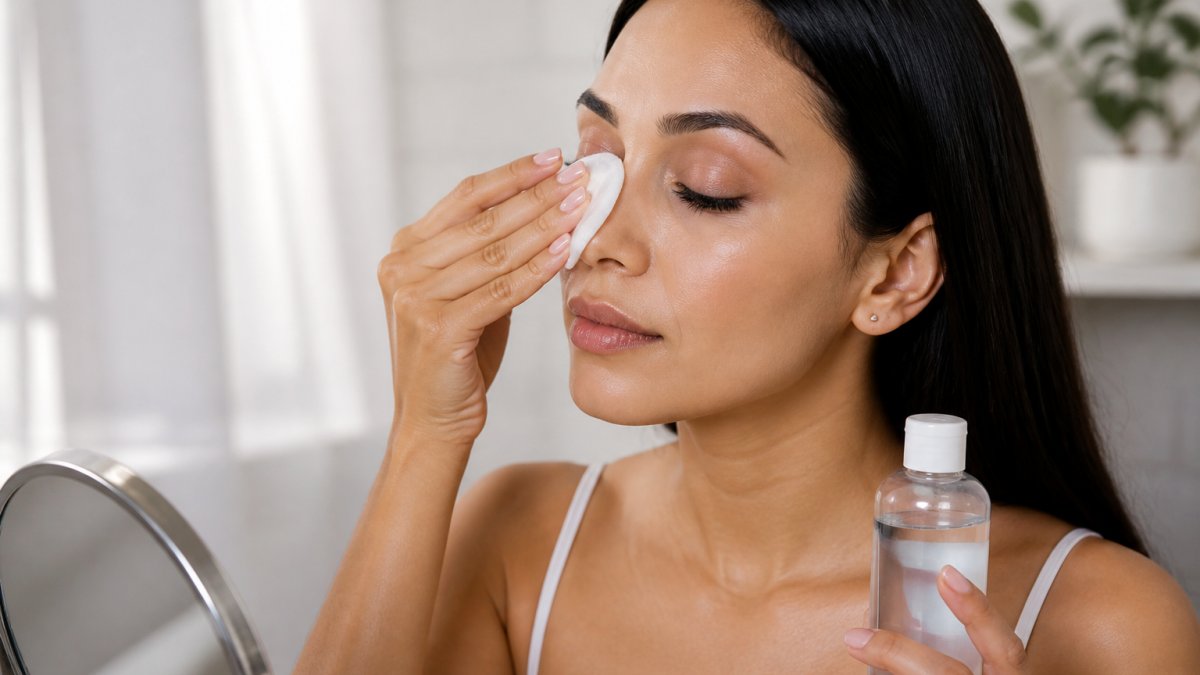
Use an oil-free makeup remover specifically labeled safe for lash extensions.
Never rub or scrub. Let the remover do the work.
For stubborn mascara, soak a pad in remover and hold it on your closed eye for 30 seconds.
Rinse with water after removal to clear any residue. Pat dry with a clean, lint-free cloth.
How to Clean Lash Extensions Daily
Daily cleaning keeps extensions looking fresh and prevents mascara buildup that can weaken adhesive bonds over time.
Clean your lashes every evening with a gentle lash cleanser.
Avoid sleeping with makeup on. Mascara left overnight hardens and becomes harder to remove the next day, increasing the risk of damage during cleanup.
If you wear mascara, remove it before bed. This prevents buildup and keeps adhesive bonds intact longer.
A common mistake is using regular facial cleansers on lash extensions. Stick to products formulated specifically for lash extensions. Learn how to maintain lash extensions properly with step-by-step aftercare, cleaning techniques, and fill schedules.
When to Skip Mascara and Use Alternatives
Many situations call for skipping mascara entirely. Your lash extensions probably don't need it.
Skip mascara if:
Your extensions are full and voluminous already
You're attending an event where you want maximum extension longevity
Your lashes are thin or sparse and need a fill soon
Skip mascara if you have:
Oily skin that breaks down adhesive faster
A tendency to rub your eyes frequently
Difficulty removing mascara without aggressive rubbing
Instead, consider these alternatives:
Lash tinting. A professional tint darkens your natural lashes and extensions, creating definition without mascara.
Lash lift. A lift curls your natural lashes and extensions upward, creating a more open-eye effect without adding product.
Fuller extension sets. Ask your technician about volume or hybrid extensions if you want more drama. These provide the effect of mascara without the maintenance risk.
The best option depends on your lash type, natural lash condition, and how much time you want to spend on maintenance.
Protect Your Lash Extension Investment at Pink Mink NYC
Lash extensions are an investment in your appearance. Protecting that investment means making smart choices about mascara and daily care.
At PINK MINK NYC, our lash specialists help you understand which products and techniques work best for your specific extensions and natural lash condition. We offer professional lash services and expert guidance on maintaining your results between appointments.
Whether you choose to wear mascara with your extensions or skip it entirely, proper care keeps your lashes looking flawless longer. Reach out to Pink Mink NYC in Williston Park & Queens, NY to book a consultation and learn how professional lash extension care protects your investment.
Frequently Asked Questions
What kind of mascara is safe for lash extensions?
Water-based mascaras are the safest choice for lash extensions because they won't break down the adhesive that bonds extensions to your natural lashes. Look for mascaras labeled oil-free and extension-safe. Avoid oil-based, waterproof, and long-wear formulas, as these contain ingredients that can weaken the lash glue and cause premature shedding. Always check the product label for compatibility before applying mascara to your extensions.
Can mascara shorten the life of lash extensions?
Yes, certain mascaras can significantly reduce how long your lash extensions last. Oil-based and waterproof mascaras break down the adhesive that holds extensions in place, causing them to shed faster than normal. Even water-based mascara can shorten extension life if applied to the lash roots or bonds, or if removed improperly. Proper application, careful removal, and choosing extension-safe products help preserve your extensions through their full retention cycle.
How do you remove mascara from lash extensions?
Use a gentle, oil-free makeup remover or a specialized lash extension cleanser. Apply the remover to a soft cotton pad and hold it against your closed eyelid for 10-15 seconds to soften the mascara. Gently wipe downward along the lash line, never tugging or rubbing sideways. Avoid the lash roots and bonds entirely. Follow with a clean, damp cloth to rinse away any residue. Pat dry with a lint-free cloth. Never use oil-based removers or waterproof makeup removers, as these dissolve the lash glue.
Can you wear waterproof mascara with lash extensions?
Waterproof mascara is not recommended with lash extensions because it contains silicones and oils that break down extension adhesive. If you do use waterproof mascara occasionally, remove it immediately after wear using only oil-free remover and be extra gentle around the lash bonds. For everyday wear with extensions, stick to water-based, extension-safe mascaras that won't compromise adhesive strength or cause premature shedding.
Lash extensions transform your look, but only when you care for them properly. The mascara question is just one part of the bigger picture, daily cleaning, gentle removal, and professional maintenance matter more than whether you wear mascara at all. Choose products designed for extensions, apply with precision, and remove carefully. If you're uncertain whether a specific mascara is safe, ask your lash technician before using it. When in doubt, skip mascara and let your extensions do the work.
BOOK NOW
Add pinkminknyc.com as a preferred source on Google →
Comments